Brand building has a lot of moving parts.
No wonder your brain feels full.
Marketing, messaging, websites, social media, email, networking, sales, tech, AI, content, design; each one can turn into its own project.
If you are serving clients, managing your schedule, following up with leads, and keeping life moving, that is a lot to manage.
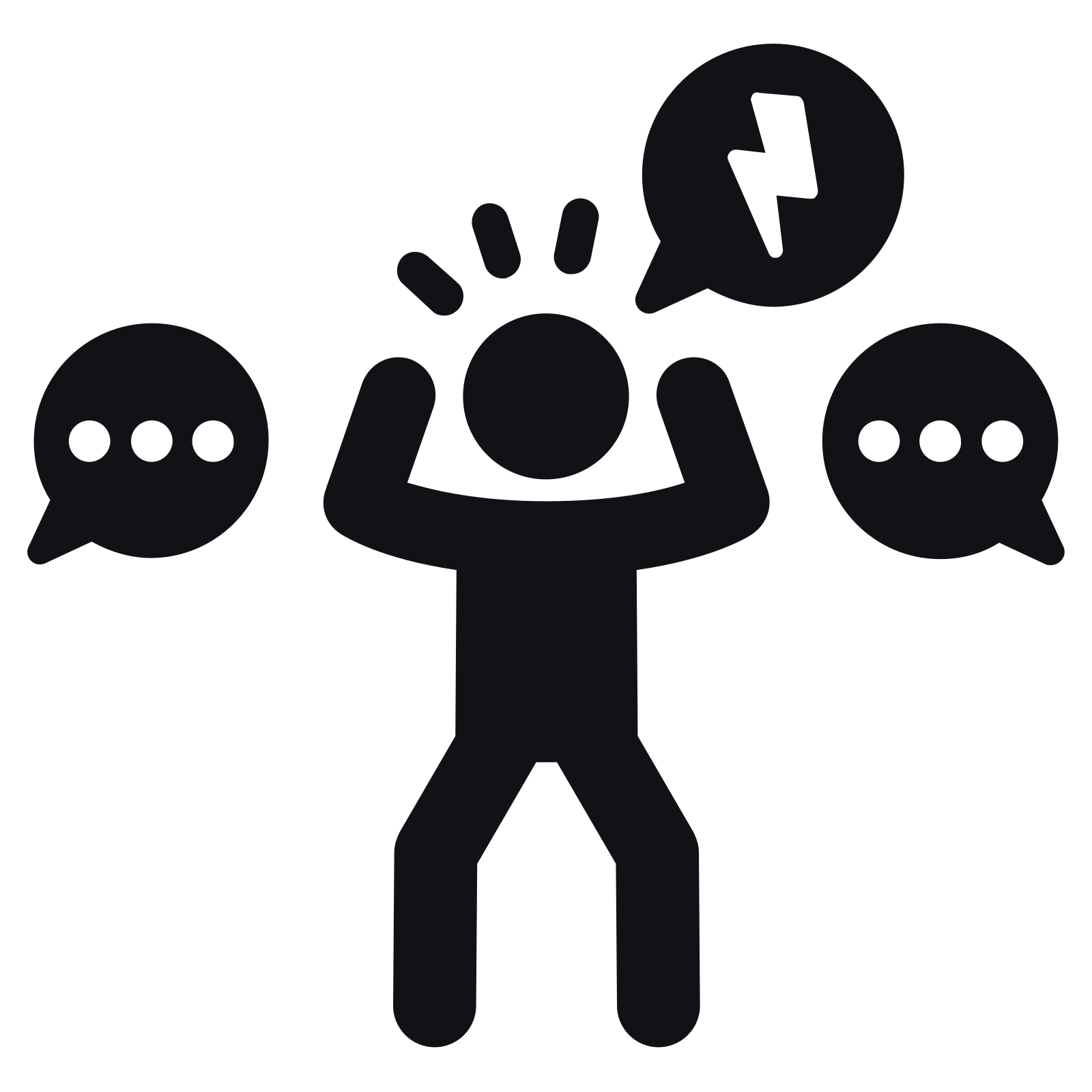
You are looking at too many moving parts at once.
Sound familiar?
You have a to-do list that looks something like this, and every single item has a voice in your head attached to it:
- Update LinkedIn. “I don’t even know how I got on LinkedIn. People asked me to join, so I did. What’s my password?”
- Post on social media. “Everyone says I need to be consistent. Consistent at what, exactly?”
- Start a blog, do SEO. “I’m online so I better be search engine optimized, right? Even though 90% of my business comes from referrals?”
- Go to a networking event. “Breakfast referral group, lunch meeting, and networking happy hour, all on the same day. Now I have to work until midnight to actually get some client work done.”
- Write my book! “It’s so much more fun than all those other things!”
Every one of these is not just a single task. Each one has moving parts that need your time, money, and energy. And when you try to do them all at once, without a strategy connecting them, it is not action. It is a reaction.
Here’s the reality: while this list can be funny, it’s really not.
I’ve had every one of these on my own to-do list. So have my clients. Each one was holding us back, and the problem got worse when we tried to tackle them all at once.
It was a very freeing moment in my business when I realized I did not have to do it all.
I started my business so I could have freedom, but for a few years I was tied to a long list of marketing that I was told I “must” do.
Experts were telling me I had to be everywhere if I wanted to grow my business. I jumped from item to item, never really fully implementing any of it.
Then I stopped. I got clear on my purpose. I defined my ideal client and my fastest route to income. Then one by one, I focused on a marketing idea.
What happened? My overwhelm stopped. I did less and had more impact. I got rooted in my strategy, then did my marketing.
I want the same for you.
Too many ideas can slow you down.
Even the good ones.
Saved posts. Screenshots. Half-written copy. Website updates. Social media plans. Email ideas. Offer tweaks. Notes from three months ago that still seem important.
The pile grows fast.
Before long, your ideas stop feeling exciting and start feeling heavy.
You don’t need more ideas. You need a clear place to sort them.
One idea creates focus.
Focus makes action easier.
“One idea at a time” does not mean you stop being creative.
It means one idea gets to be active first.
The rest can be saved, sorted, parked, or revisited later. Nothing needs to disappear. It just needs to stop interrupting every decision you make today.
Your brand needs connection.
Random tactics feel like starting over.
A website update, social post, email, flyer, Google Business Profile update, or networking message can all be useful.
But when each piece lives by itself, every task feels like a fresh decision.
A stronger brand connects the pieces. One clear message can become a website section, a post, a follow-up email, a conversation starter, or a simple graphic.
Think of this as a house that you are building. Each “room” you add on is connected to the others. Your ideal clients can wander through these rooms and get a complete picture of your business.
That is how one idea starts doing more work for you.
You do not need everything now.
Your real capacity matters.
Some ideas belong in the next step. Others belong in a later phase, a someday folder, or the “not now” pile.
That does not make them bad ideas.
It means your time, energy, budget, clients, and real life are part of the decision.
Ask a smaller question.
What matters most right now?
When your list gets too big, “How do I do all of this?” is not a useful question.
Start smaller.
Which idea would make the next decision easier?
That might be clarifying your offer, fixing one page, organizing your notes, writing a follow-up email, or choosing what not to do this month.
Small can still be strategic.
The right small move can change a lot.
Random tactics and tweaks don’t work.
Instead, use focused updates to save time, reduce stress, improve referrals, clarify your message, or make your next project easier.
This is how you build without burning yourself out.

In Addition…
Organizing your ideas doesn’t just reduce overwhelm. It also makes it easier to clarify your message, focus your marketing, decide what to build next, and recognize which opportunities truly fit the life and business you want to build.
We use your custom Brand Toolkit to sort before we build.
You already have enough, so we capture and organize your ideas.
In the Brand Builder Workshop, we get your ideas out of your head and into a structure you can actually use.
Your custom Brand Toolkit gives us a place to see what matters now, what connects, what can wait, and what needs to change.
Then we build from there; one useful piece at a time.
Scattered thoughts can become a brand that works.
If your ideas are piling up faster than you can use them, you do not have to figure it all out alone.
Bring the swirl. We’ll sort it into clear options and choose the next smart step.
Need some help sorting your ideas & options?
If you don’t know where to start, let’s talk about where you are, what feels overwhelming, and whether working together is the right fit.

Marketing Strategist & Designer
With 32+ years in marketing, design, websites, and strategy, I’ve seen how easy it is for service-based entrepreneurs to get stuck or overwhelmed. That’s why I blend those services with my Brand Builder Toolkits — to give people like you a smarter, saner way to build. It’s a structured but flexible approach to adjust to your business and life. Let’s build your brand together.